RETRO REBOOT | Strider (Arcade/Sega Genesis)
Capcom's side-scrolling hack-n-slasher was a cornerstone of action game innovation
RETRO REBOOT
"ColonelFancy" Mike Lind
7/8/20264 min read
Developer: Capcom
Publisher: Capcom
Release date: 1989
Strider has always been one hell of an action game. At surface value, it's an intense, high-paced action slasher that was probably a considerable quarter muncher back in the day. venture to the right, to the left, up, and down, dispatching any and all waves of enemies that appear. Just beneath that is a game that is smarter and more progressive for the genre than I had initially given credit.
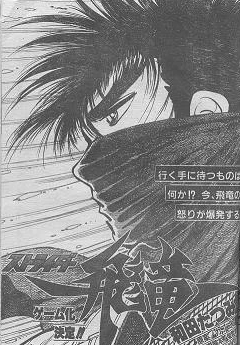
I remember first seeing the game on the Genesis, having no idea it was an arcade title until years later. even more so than its influence in the action game department, Strider Hiryu had one of the most awesome styles in the days where I was just starting to watch late 80's anime without understanding it. Combined with his acrobatics, the music, the dystopian futuristic setting, and the daunting enemies, this universe felt like a blend of Tekkamen Blade, Neo Human Casshan, and Kamen Rider.
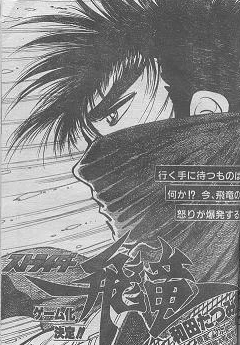
Early on, Capcom seemed to have grand plans for the Strider series that might've ventured into a multimedia franchise of sorts. There was apparently a six chapter manga that the Nintendo game was loosely based on, I've spent some time trying to track down scanlations of it. It was written by Tetsuo Shiba and illustrated by Tatsumi Wada, who worked as a manga-ka throughout the 90's, but little else seemed to be known about him.
It's not that Strider wasn't successful. But by the time the character was introduced in the Marvel vs Capcom games, he became far more noted for the fighting games, and it didn't seem to catapult the Strider series itself into greater interest. Which is too bad. Beyond the 2014 explorative action entry, it's been quiet on the Strider front for ages.
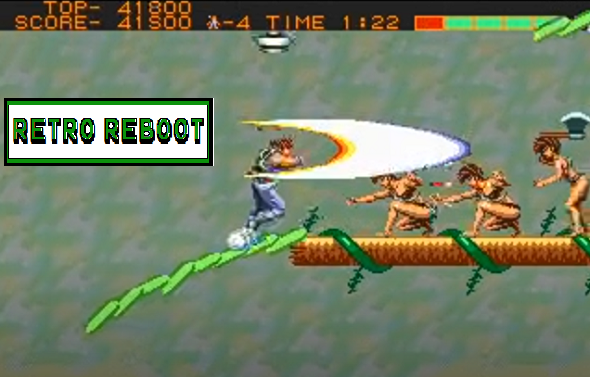
The controls are simple, but the actions you can prompt are quite intuitive and advanced. Hiryu has several different jumps that can be taken advantage of, depending on the situation. Jumping straight up is your typical leap, while jumping to the left or right he performs a cartwheel that goes a little higher. He can slide, scale walls and ceilings, all leaving him open to attack while doing so. Combine the various means of traversing the terrain with the layout utilizing stubborn enemy placement and physics, and it makes for a tough experience.
Strider feels more thought out than another side-scrolling Capcom game that experimented with unique navigation in Bionic Commando (these games do share the same game designer, Tokuro Fujiwara). The difference being, where I feel Bionic Commando essentially makes you buy an engagement ring for its control scheme by omitting a jump button, Strider's challenge comes from rhythm, timing, and understanding where you are. Despite his plethora of gadgets, the life bar depletes quickly. Maybe it can be a little frustrating, Strider does have a fairly large sprite, so his hurtbox is a touch awkward.
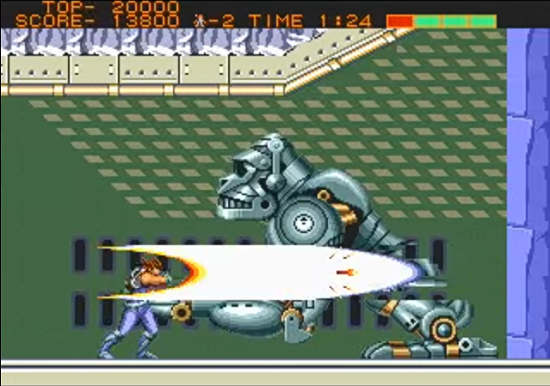
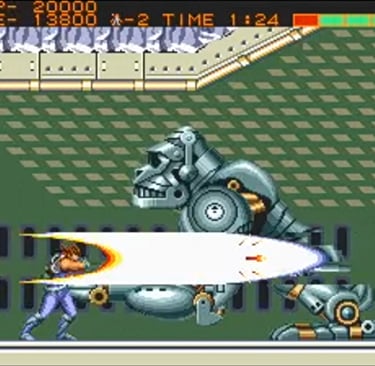
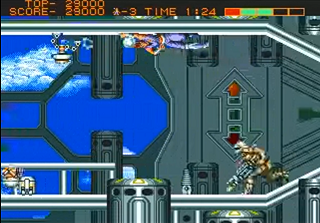
Developed on Capcom's CP System, the graphics are eye-catching. As mentioned in paragraphs above, the enemy designs are striking, the stages and backdrops have great style to them, and the animation is smooth with little in the way of slowdown. Even the Genesis version is quite comparable when it comes to frames and detail. Were it not for the timer, I'd stand and observe the backgrounds.
The music is quite good. The audio clips are memorable, and each stage has very elaborate compositions that seem inspired from Russia. There's a lot of iconic capcom music, Strider really does stand out. As mentioned, when you hear those tunes coming from Marvel vs Capcom as his theme, they're quite unique in comparison to other Capcom titles. Junko Tamiya wasn't credited for her work on the game. When it comes to sound effects, that stinging "ZHWIING!!" from his sword Cypher is quite dynamic. Back when I used to doodle, I'd often write that onomatopoeia down in the comics I used to draw.
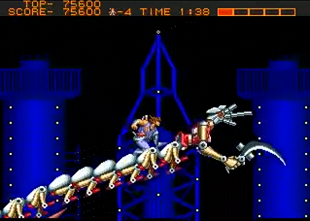
The game is five stages, and each stage can be completed fairly quickly. That's not to call the game easy or anything. It's a hell of a thrillride, with fun boss battles, interesting level design, and some of the coolest weapons a protagonist could get at the time. The Options A (droids), B (the robo tiger), and C (robo hawk) would be iconic additions to his arsenal in the series and in the aforementioned fighting games.
Strider remains a sweet game to turn on and get the blood going. It stands out from other coin-op titles, not necessarily punishing you with overly stubborn difficulty that turns into beginner's traps (goddamn Ghosts 'n Goblins). But a satisfying side-scroller that doesn't overstay its welcome with a respectable challenge. It's quite an iconic game that highlights Capcom's ingenuity in the late 80's and early 90's.